
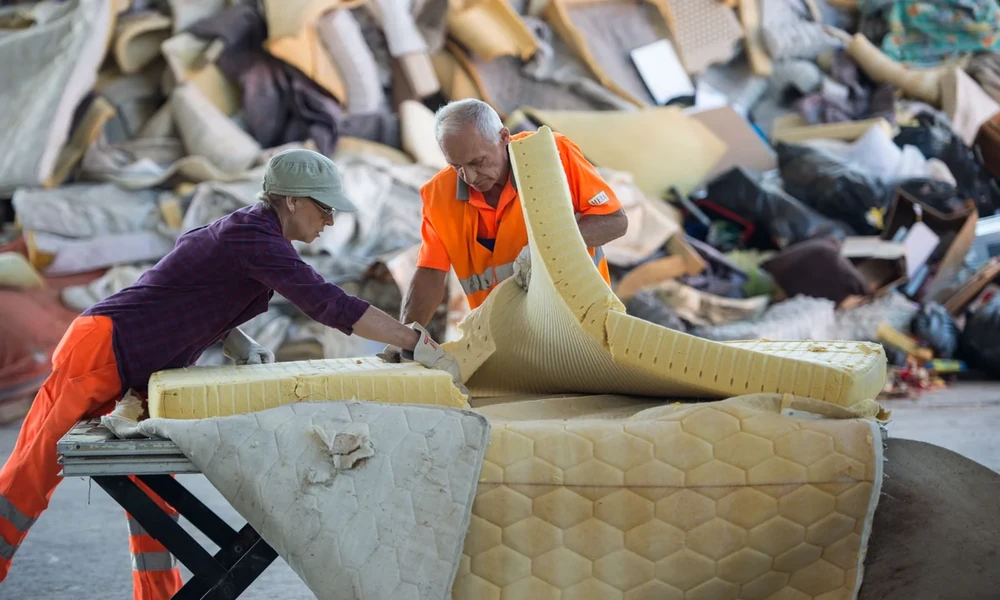
Discarding an old mattress might seem like a minor personal decision, but on a larger scale, these choices stack up, literally, into a pressing environmental concern. The hidden toll of mattress waste is not only about size but also about longevity and the complex materials that make up each discarded bed.
Debunking the Myth: Mattress Waste Is Just Another Bulky Trash Problem
It is tempting to dismiss used mattresses as just another nuisance in the waste stream, but their impact extends far beyond being bulky. These cumbersome items take up significant space in landfills, yet their true threat lies in their stubborn refusal to break down. Unlike food waste or even paper, mattresses linger for decades, sometimes far longer, leaching chemicals and contributing to hazardous landfill conditions.
Why Mattress Waste Is an Environmental Threat Beyond Size
Mattresses often contain synthetic foams, chemical fire retardants, and metals, all of which have the potential to pollute soil and groundwater. Additionally, the sheer volume is staggering: millions of mattresses are discarded annually in North America alone, each one forming a mini-landfill of its own.
The Hidden Longevity of Mattresses in Landfills
A mattress can take more than a century to fully decompose. This means that every mattress sent to a landfill today could still be there for generations, slowing landfill operations and complicating efforts to reduce municipal waste on a broader scale.
Myth 2: Recycling Mattresses Isn’t Feasible or Worth the Effort
Many believe mattress recycling is inefficient, but the reality is different. Specialized programs now effectively recover materials like steel, polyurethane, cotton, and wood, which are then reincorporated into new products. For example, recycled steel springs are used in manufacturing, polyurethane foam becomes carpet underlay, and wood can be repurposed as mulch.
How Mattress Components Are Effectively Recovered and Reused
Recovered metals from old mattresses reduce the need for new mining. Cotton fibers are given new life as thermal insulation or automotive padding. Even the foam layers become part of everyday items. These tangible uses close the loop on what would otherwise be a wasteful end-of-life cycle.
Innovations Driving Mattress Recycling Efficiency
Automation and improved sorting have made modern recycling far more efficient. Facilities like Recyc-Matelas in Canada employ advanced techniques to separate and process each component, significantly boosting recovery rates while minimizing contamination.
Myth 3: Only New Mattresses Benefit the Environment, Not Disposal Practices
It is easy to assume that environmental gains start and end with choosing an eco-friendly mattress, but what happens at the end of a mattress’s life is just as crucial.
The Environmental Impact of Reducing Mattress Waste Through the 3 Rs
The principles of Reduce, Reuse, and Recycle (the 3 Rs) are central to minimizing waste. Reducing the number of mattresses sent to landfill, reusing their components, and recycling raw materials saves energy and conserves natural resources. For instance, using recycled metal cuts down on emissions associated with mining and refining raw ore.
Case Studies: Real-World Benefits from Mattress Reuse and Recycling
Communities that have integrated robust mattress recycling programs report notable decreases in landfill volume and improved resource efficiency. In Canada, pilot programs have demonstrated that up to 95% of mattress materials can be recovered and redirected from landfills.
Myth 4: Mattress Recycling Doesn’t Significantly Reduce Landfill Burden
The numbers tell another story. Each standard mattress occupies roughly 23 cubic feet of landfill space, and with millions discarded annually, the burden quickly becomes clear.
Quantifying Mattress Waste Reduction Through Recycling Programs
Even a modest recycling initiative can divert thousands of mattresses from the landfill each year. Cities adopting these schemes have reported dramatic reductions in landfill volume allocated for bulky waste.
The Ripple Effect on Landfill Space and Degradation Time
Mattress recycling does more than just free up space. It reduces the potential for fire hazards, methane production, and slow degradation, all of which have long-term environmental costs.
Myth 5: Mattress Materials Are Too Complex to Recycle Properly
Mattresses are indeed complex, but modern technology can handle the challenge.
Breaking Down the Components: Foam, Metal, Cotton, and Wood Reuse
Foam becomes underlay; steel springs are smelted and reused; cotton gets new life as insulation; and wood is mulched or repurposed. Each material, when recovered properly, offsets the need for virgin resources.
How Each Material Is Repurposed to Replace Raw Resources
By tapping into existing materials, recycling operations reduce demand for extraction, save energy, and cut emissions.
Myth 6: Mattress Recycling Is an Individual’s Responsibility Only
Consumers play a part, but systemic change comes when all stakeholders are engaged.
The Role of Manufacturers, Retailers, and Municipalities in Mattress Waste Reduction
Manufacturers can design for easier disassembly, retailers can offer take-back services, and municipalities can create policies that encourage or require recycling.
Community and Industry Collaboration Models That Work
Partnerships among local governments, businesses, and recycling firms have already proven effective, making mattress waste reduction a shared responsibility.
The Environmental Payoff: Tangible Benefits of Reducing Mattress Waste
Cutting mattress waste has ripple effects throughout the environment.
Reduced Resource Extraction and Energy Consumption
Every recycled mattress saves raw materials, reduces mining, and uses less energy compared to producing new products from scratch.
Decreased Pollution and Greenhouse Gas Emissions
Recycling keeps pollutants out of soil and air while slashing greenhouse gas emissions associated with landfilling and raw material extraction.
How Consumers Can Make a Difference Today
Sustainable disposal is within reach.
Choosing Sustainable Disposal and Recycling Options
Look for local recycling programs, participate in retailer take-back schemes, or donate usable mattresses to organizations that refurbish them.
Supporting Policies and Initiatives That Promote Mattress Waste Reduction
Advocating for community recycling, supporting extended producer responsibility policies, and spreading awareness about responsible mattress disposal all help ensure that today’s waste does not become tomorrow’s legacy.