
Ask anyone who has lived through a few Minnesota winters and they will tell you the cold does not arrive all at once. It steps down. A crisp October night at 40 degrees, a first hard freeze in early November, a January week that never climbs above zero. Each rung on that ladder wakes up a different weak spot in a house, and most winter water damage can be traced back to the exact temperature where a particular pipe, gutter or roof edge gave up.
Restoration crews around St. Paul watch this pattern repeat every season. Rapid Restoration DKI, a family owned company handling water, fire and storm losses across the Twin Cities and western Wisconsin since 2009, keeps IICRC certified technicians on call around the clock, because the calls tend to cluster on the coldest nights and on the first warm afternoons that follow them. Knowing which threshold triggers which problem gives a homeowner a head start the weather rarely offers.
Forty Degrees and the Setup Nobody Notices
Damage often begins well before anything freezes. The jobs left undone in fall decide how the house behaves later.
Gutters packed with maple and oak leaves hold water that will become a block of ice at the eaves. Soil that has settled against the foundation tilts melt water toward the basement instead of away from it. A sump pump that ran hard all summer may have a worn float switch nobody has tested. And the garden hose still attached to the outside spigot is quietly setting a trap for the next rung down.
The First Hard Freeze
At 32 degrees and below, outdoor plumbing gets tested first. Frost free sillcocks are designed to drain themselves, but only when nothing is connected. A hose left attached holds water inside the valve, and that water freezes back into the part of the line running inside the wall. The split usually stays hidden until spring, when someone turns the spigot on and water pours into the basement ceiling instead of the yard.
Irrigation lines and the sump discharge pipe come next. A discharge line that sags or lies flat across the lawn can freeze solid, leaving the pump pushing against a plug of ice. When a mid winter thaw sends groundwater into the pit, there is nowhere for it to go but over the edge.
Twenty Degrees and a Warm Attic
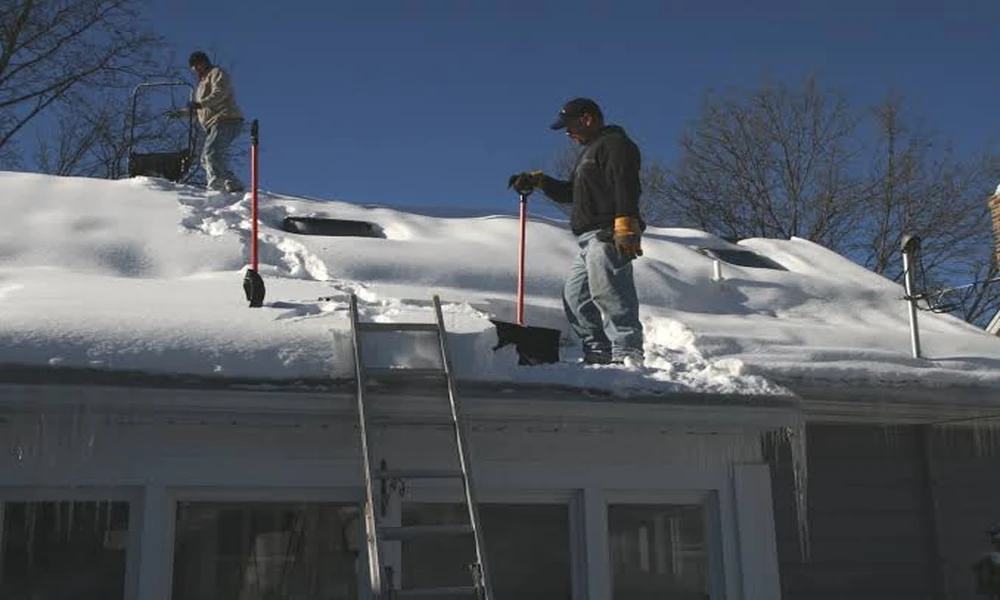
Somewhere in the teens and twenties, with snow on the roof, the attic becomes the main character. Heat leaking up from living spaces warms the roof deck, snow melts from underneath, and the water runs down to the overhang, where the roof is as cold as the outside air. It refreezes into a ridge, and the next round of melt water pools behind it and creeps under the shingles.
The University of Minnesota Extension notes that ice dams can lead to mold as well as wet ceilings, and its guidance keeps returning to the same root cause, which is uneven roof surface temperatures. A roof rake relieves pressure in the short term. The lasting fix lives in the attic, around recessed lights, bath fan housings, chimney chases and the attic hatch, where warm air slips through.
A few signs tend to show up when an ice dam is already pushing water inside.
- Brown rings or bubbling paint along the top of exterior walls
- Damp insulation near the eaves when the attic is checked on a sunny afternoon
- Frost or icicles forming on the inside of soffit vents
- Water stains around window trim on the upper floor
Zero and Below
When the thermometer drops under zero, the pipes inside the house start to feel it. Sinks set against exterior walls, plumbing that runs through an unheated garage or crawlspace, and lines near drafty rim joists are the usual suspects.
One detail surprises many homeowners. A frozen pipe rarely bursts at the spot where the ice forms. The ice acts like a cork, and pressure builds in the stretch of pipe between that blockage and a closed faucet. The rupture shows up there, sometimes several feet away, which is why the leak that appears after a deep freeze can seem unrelated to the cold spot. Opening cabinet doors on outside walls and letting a faucet drip on the worst nights keeps that pressure from building.
Twenty Below and the Furnace Question
On the bitter nights that make the national news, the biggest risk is a heating failure. High efficiency furnaces vent through plastic pipes on the side of the house, and those intake and exhaust openings can frost over or get buried in drifted snow. The furnace shuts itself down for safety, and a house with no heat at twenty below can reach freezing inside within hours.
Homes left empty for a winter trip or between owners are the most exposed. A smart thermostat or a simple temperature alert, plus a neighbor with a key, turns a potential flood into a routine service call.
The Thaw Is Its Own Rung
The ladder runs both ways. A late winter warm spell or the March melt brings out damage that sat frozen in place for weeks. Cracked supply lines finally flow. Ice dams release their water all at once. Snowmelt hits ground that is still frozen a few inches down, so it cannot soak in and runs along the foundation looking for a crack or a window well.
Basements in older St. Paul and Minneapolis neighborhoods, many with fieldstone or block walls, usually show this first as damp corners, white mineral crust on the masonry, or a musty smell that was not there in January.
When Water Shows Up Anyway
Even a well prepared house can lose a round. What happens in the first hour shapes the size of the repair.
- Shut off the main water valve if it can be reached safely, and keep clear of outlets or appliances sitting in standing water.
- Photograph and film every wet area before moving anything, since insurers rely on that record.
- Lift furniture and rugs off wet floors so they stop wicking water upward.
- Leave sewage backup and water that has touched contaminated surfaces to trained crews with protective gear.
- Get drying underway within a day or two, because mold can begin growing on wet drywall and carpet pad inside that window.
Materials that look dry on the surface can hold moisture inside wall cavities and under flooring for weeks. Moisture meters and thermal cameras are how restoration teams find that hidden water and decide what can be dried in place and what has to come out.
Climbing Back Up the Ladder
Winter water damage is rarely random. It follows the thermometer. A walk around the house before the first hard freeze, an attic check before the snow piles up, a plan for the coldest nights and a close look at the basement during the thaw cover nearly every rung. A house that is ready for each threshold tends to come through a Twin Cities winter dry, and when it doesn’t, the homeowner already knows exactly where to look.