
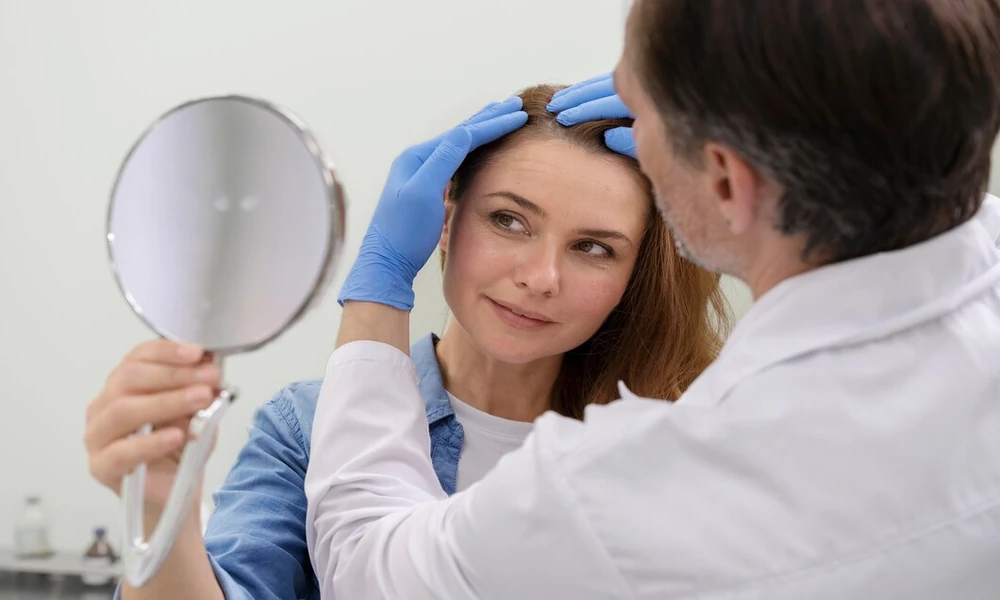
A Healthy scalp starts with healthy hair. To facilitate the growth cycles, hair follicles depend on sufficient blood flow and nutrients to support their growth. Nonetheless, genetic factors, hormonal changes, old age, stress, and nutritional deficiencies may also cause hair thinning. The current studies on hair restoration touch upon the biological mechanisms that act in relation to the functioning of the follicles and scalp condition. One of these new fields is the analysis of small portions of protein which have a role in cellular signaling. Such compounds have drawn the attention of scientists as they could allow researchers to gain an insight into the way follicles react to inflammation and other alterations to their environment.
The Science Behind Hair Restoration
Studies on hair loss peptides are analyzing the actions of certain signaling molecules that potentially affect follicle activity and the hair growth cycle. There are indications from some laboratory studies that some specific compounds may influence the processes related to tissue healing and cellular communication. Nevertheless, there is little evidence of their effectiveness in humans, and it differs significantly among compounds. The name of this research-driven market is peptides. Consumers are advised to know that scientific interest is not the basis of clinical effectiveness. The thinning of hair might be as a result of a number of things; hence, it is always a crucial procedure to determine the other elements before deciding on any course of treatment that emerges.
Safety and Evidence in Emerging Treatments
Despite the potential of new studies to provide research possibilities, it is important to draw the line between new research and proven medical therapies. A biologically active compound tested in the laboratory might not have the same effects in humans. Its method of delivery, concentration, as well as the side effects, is also a critical consideration. An incorrect assessment may lead to incorrectly defining potential medical conditions and the possibility of using established treatments or progressive testing.
Developing Attainable Hair Confidence
Restoring hair is far beyond merely identifying one ingredient. Having a healthy scalp with proper hair care practices, a balanced diet, and proper medical consultation may assist in maintaining healthy hair. Researchers are also looking into hair loss peptides to gain more insight into their potential use in therapy in the future. However, these methods are not to be substituted for evidence-based care. The hair loss peptides can be attractive to consumers looking into new research, but claims made about the product should always be considered. Long-term trust is achieved through awareness of personal hair issues and safe choices that are supported by credible evidence. Research progress can broaden the options of individuals with hair loss because scientifically proven treatments can be developed.